Setting up your first aquarium can be a daunting task. There are so many things you have to worry about. What water is good for fish? Can all fish go together? What if your pH is wrong? Is your tank too big? And most importantly: How do I keep my fish alive?
Once you get past the initial setup, keeping aquariums can be a fun, relaxing, and rewarding hobby.
To help you get started, I’ve created this list of mistakes beginners make when setting up an aquarium. With a little patience and research, you can make sure your fish survive and thrive.
- Starting with a tank that is too small
- Using soap
- Skipping dechlorinator
- Using distilled water
- Not using a filter
- Adding fish too soon
- Adding too many fish at once
- Keeping incompatible species
- Not acclimating your fish
- Not keeping tank at the proper temperature
- Chasing perfect parameters
- Conclusion
Starting with a tank that is too small
When I worked in a chain pet store, many first-time fish owners wanted to start small for their first aquarium. They would pick up the smallest enclosure they could find, whether it be a three-gallon, a one-gallon, or a critter tote meant for short-term transport only.
“Oh, if the fish lives, we will upgrade!” they would say. “We are just starting out!”
But starting small is setting yourself up for failure. The smaller the volume of water, the faster it gets dirty, and the more difficult it is for the tank to become established. In larger tanks, the waste produced by the fish is diluted by the increased volume.
Larger tanks are actually easier to maintain than small ones.
Small tanks are prone to swings in temperature, pH, and levels of nitrogen compounds.
If a small fish dies in a 20-gallon tank, no big deal (okay, it is rather sad). Of course, you should remove the deceased as soon as possible, but it is unlikely to cause a problem right away. If the same fish were to die in a 3-gallon, any other inhabitants are in serious danger. Carcasses, as well as poop and uneaten food, release ammonia as they break down. In a small volume of water, it quickly becomes toxic!
What if your fish tank is too small?
Your fish can become stressed due to poor water quality, lack of room to swim, or no way to get away from tank bullies.
They can also become stunted. As fish grow, they release a hormone into the water. The concentration of the hormone in the water tells them how much room they have, and it will make them stop growing if it gets too high. “A fish only grows to the size of its tank,” but it will be dealing with things like organ damage, deformities, and a weakened immune system. Purposely stunting a fish is cruel and will substantially shorten its lifespan.
So, when selecting your first tank, choose a size that provides a stable environment and that can support the species you want to keep–long-term.
Using soap
Anything you put into your aquarium should be rinsed in plain tap water before you use it. This includes most substrates, decor, and even your filter (only if it is new!). This removes any dust or debris that could harm your fish or, at the very least, make the water cloudy.
Do NOT use soap or ANY OTHER CHEMICAL with anything that will come into contact with your fish!
According to Dawn’s commercials, it is a great soap to use if you stumble upon a baby duck covered in oil. It is toxic to fish, and they will die if they come into contact with it.
“But what if I rinse it really, really well?”
You can never be sure you got it all. Just don’t use soap.
I’ve had people come in mere hours after I had sold them fish, wondering why they all died. I tested the water, and it was pristine! No ammonia or nitrites. PH was within an acceptable range. But you know what doesn’t show up on those little test strips? Soap. The truth was uncovered after some questioning, and now my customers knew why their 55-gallon tank became a goldfish graveyard.
Cleaning the tank or supplies with soap is a common mistake beginners make when setting up their aquarium, but it can be a costly one.
Skipping dechlorinator
Most municipal water supplies contain just a tiny bit of chlorine. Just a taste. It helps keep the water safe for us to drink because it kills bacteria. However, it also kills fish.
Chlorine damages fishes’ gills on a cellular level, and then they slowly suffocate.
If you are on city water, you must use a dechlorinator (also known as a water conditioner). It binds to the chlorine and makes tap water safe for fish. Some brands also bind to heavy metals (like lead, manganese, arsenic, etc.) and others temporarily detoxify nitrogen compounds.
Can’t you just let the water sit for 24 hours to get rid of the chlorine?
Sure! But not all of the nasties may evaporate. Tap water also may contain chloramines, which are equally toxic to fish and do not easily evaporate. The easiest and fastest way to remove chloramines from tap water for an aquarium is to use a dechlorinator.
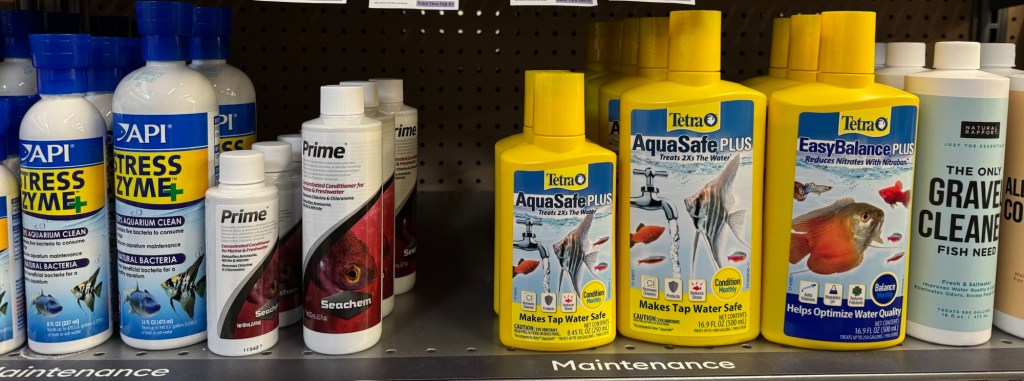
In addition, water conditioners work instantly, so you can add the water to your tank immediately, provided it is the appropriate temperature.
I use a Hygger water changer for my tank maintenance, and I dechlorinate the water as it pours into the tank, straight from the sink, and I have had no issues thus far. I use Seachem Prime, and although it is stinky, it works wonderfully.
Remember: use a dechlorinator anytime you are adding water to your tank, whether you are setting it up for the first time, doing a water change, or just topping it off.
Using distilled water
If you don’t want to use a dechlorinator, using distilled (or RO) water seems like a good idea. It’s readily available, and many grocery stores have refill stations where you can get that beautiful, pristine water for relatively low cost.
However, distilled water by itself is a poor choice for aquariums, and using it will likely result in fish death.
Why is distilled water bad for fish?
The main reason is that it lacks minerals. All fish, even those from soft-water environments, need some minerals in their water. Water tends to move from areas of low salt concentration to areas of high salt concentration.
Distilled water doesn’t have any salts or minerals, but your fish is full of them. So, where does the water go? Into the fish. This can lead to all sorts of not-awesome things, including organ failure and death, as water enters your fish’s cells and causes them to swell. Using distilled water impacts your fish’s ability to osmoregulate, or control the balance of salts, electrolytes, and water within their system.
In addition, distilled water is prone to pH swings because it lacks buffers (like carbonates) that keep the pH stable, making it unsafe for our sensitive fish friends.
Can you use distilled water in a fish tank? Yes, but only under certain circumstances.
It allows fish keepers to add a specific amount of minerals to the water, which comes in handy when keeping sensitive species. It can also be added to a tank of “normal” water to lower the hardness, or it can be used to top off a saltwater aquarium to replace evaporated water.
While it can be useful in some situations, you should not use pure distilled water when setting up your aquarium.
What about spring water?
There is nothing inherently bad about using spring water for an aquarium. It’s chlorine-free, but it still has minerals. However, the chemical composition of the water can vary greatly depending on its source, and it will also be expensive in the long run.
Unless you live in an area with horrible water (your local pet store will often test it for free), it is best to just use your tap water with a dechlorinator. It is relatively stable, safe, and much cheaper than buying gallons of water at the store.
Not using a filter
Fish need a filter because it provides three crucial things: water movement, oxygenation, and a place for beneficial bacteria to grow.
Why is water movement important in an aquarium? It prevents stagnant spots and helps stabilize water temperature, ensuring that the temp is uniform throughout the aquarium.
Most common aquarium fish (like guppies, tetras, gouramis, and angelfish), benefit from having their water in the mid-upper seventies. In many parts of the world, this requires a heater.
Placing the heater next to the filter allows the warm water to circulate throughout the tank, ensuring the heater works properly and your fishies have a stable environment.
Water movement also helps prevent the oily looking film that develops on the surface of stagnant water, which can prevent good gas exchange.
Another reason that filters are important is that they help oxygenate the water. Fish need oxygen in the water to breathe, just like we need it in our air. Without oxygen in the water, your fish may appear to gasp for breath, often gathering at the surface of the water as they struggle to breathe.
The filter on your aquarium is also the primary home for the beneficial bacteria that your fish need to survive. This good bacteria is also found in the substrate and on your plants and decor. Having a filter helps prevent a tank crash by being a refuge for all of your good bacteria. Without one, your tank is more prone to things like ammonia spikes–which can kill your fish.
Adding fish too soon
Another very common mistake that beginners make when setting up an aquarium is adding fish right away. When it comes to keeping fish, patience is a virtue.
You’ve just set up your tank—it has all of its decor, the filter is running, and you’ve added the last little bit of water. It can be tempting to run back to the store and grab your fish. Or perhaps you bought the fish at the same time you bought the tank.
But here’s the thing: new tanks are unstable.
When you first fill up the tank, the water temperature may be all over the place. Warm water rises to the top, and cold water sinks to the bottom. As the fish swim along, they may be fatally shocked when they venture into a pocket of ice-cold water. Allowing your tank to run for a couple of days allows everything to settle and the temperature to stabilize.
Letting your tank run for a bit also lets you make sure that your filter and heater are working correctly and gives you some time to watch for potential leaks.
At minimum, you should let the tank run for 2-3 days before adding your first fish.
Ideally, you will establish the nitrogen cycle before adding your fish. It can take over a month, but it gives your fish the best chance at survival. A fish-in cycle is possible, but it can be rough on the fish as they must cope with tumultuous water parameters.
I recommend a fishless cycle, but fish-in cycles can be performed with plenty of water changes and dosing of certain water conditioners like Seachem Prime, which temporarily detoxify ammonia and other nasties.
Adding too many fish at once
Another mistake that beginners make when setting up their aquarium is adding too many fish at once. They want to fully stock their tank right away. While having a full, lively tank is every aquarist’s dream, it should be your final product, not your first step.
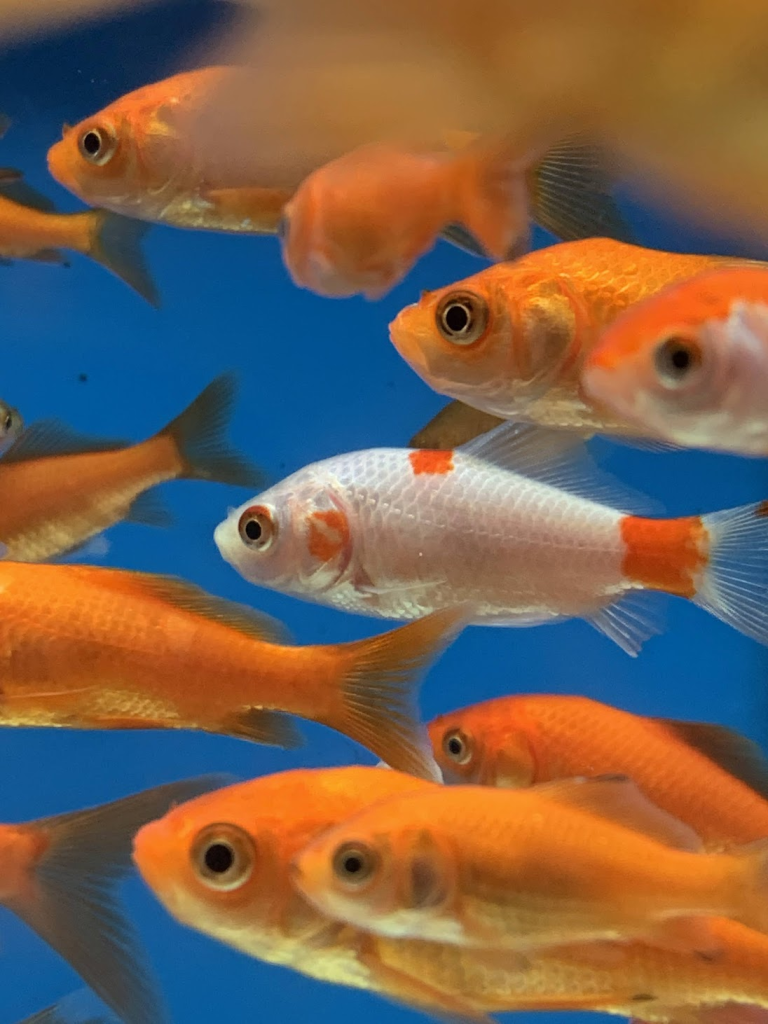
When setting up your tank, you should add a few hardy fish at a time, especially if it is uncycled. If you have undergone a full fishless cycle and you know your tank can process the ammonia that your new fish will produce, your initial stocking can be heavier.
Unfortunately, many beginners don’t cycle their tanks ahead of time. They fully stock (or even overstock) their tank right away, and come back a few days later with the tiny bodies.
Stock your tank no more than halfway when adding your fish for the first time. The fewer fish you add, the better. After a few weeks, you can add a few more fish. Slow and steady wins the race!
Keeping incompatible species
Believe it or not, not all fish can live together. Even if they are the same size, share a temperature or geographic range, or just look really, really good together, you have to take into account the aggression level of each species.
Fish temperaments range from “so chill that you can put them with anything” to “will kill anything that moves.” Fish are typically classified as community/peaceful, semi-aggressive, and aggressive. When setting up your first aquarium, you should make sure that your inhabitants have the same temperament.
Beginner aquarists should stick to community or semi-aggressive fish, although the latter requires more caution and research.
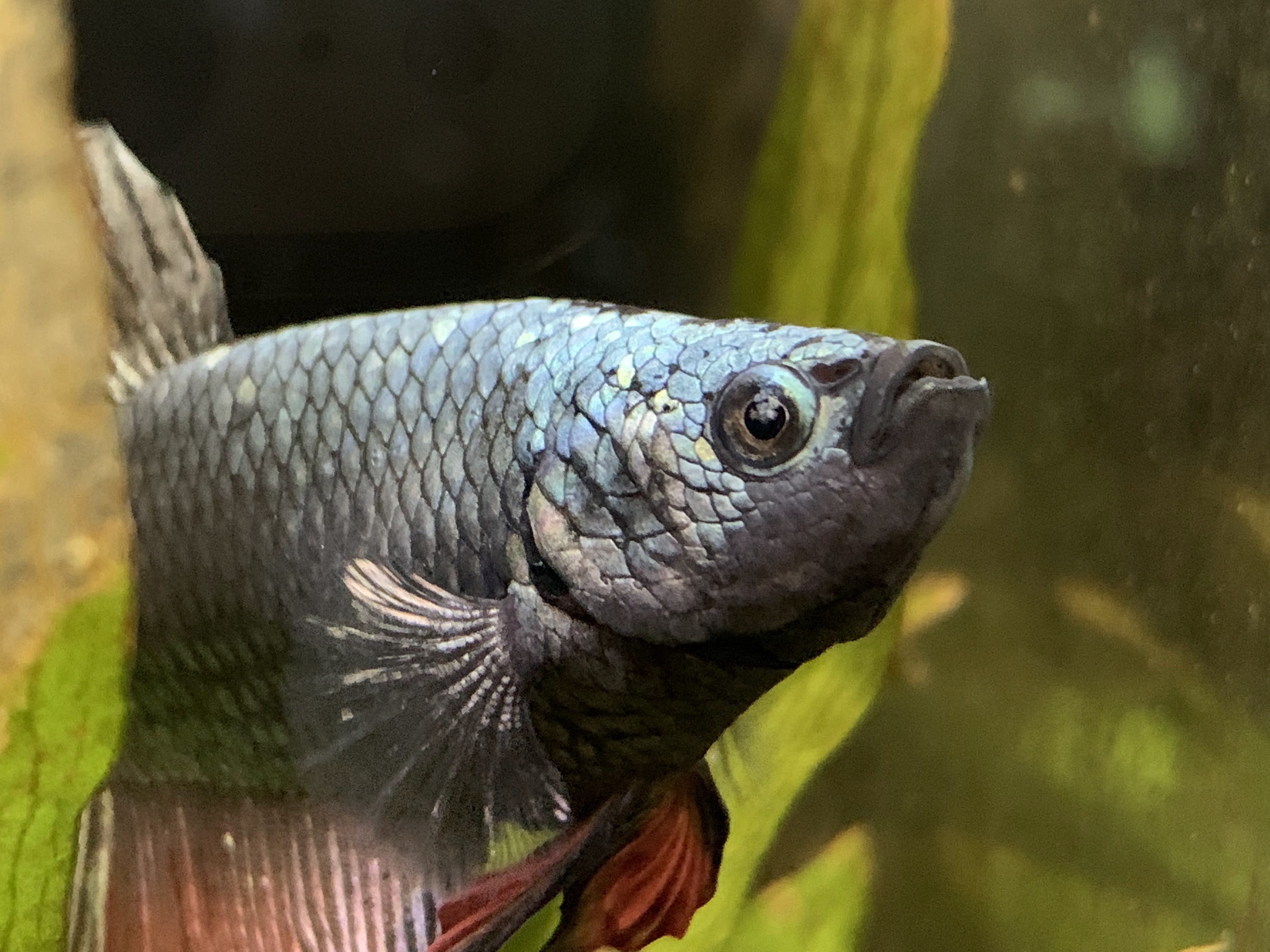
Within each class, there is some variation. While most tetras are considered peaceful, they can act semi-aggressively if they are not kept in a group. Livebearers (mollies, platies, guppies, and swordtails) are also considered peaceful, but an improper ratio of males to females can result in relentless bullying.
In addition, not all fish within a class are compatible. For example, tiger barbs and angelfish are both considered semi-aggressive, but they shouldn’t be kept together. Tiger barbs are notorious fin-nippers, and the long-finned angelfish is an easy target.
Can you keep semi-aggressive fish in a community tank? Absolutely! I’ve kept angelfish with platies, corydora catfish, and various tetras. Gouramis make another good addition to a community tank. Some semi-aggressive fish can even be kept with aggressive ones, and some fish transcend boundaries entirely. Take the pleco family, for example. They live with many types of fish, from guppies to Oscars, as long as the tank is large enough to accommodate them.
What happens if you keep a peaceful fish with an aggressive one? Violence. The docile fish will not be able to hold its own. While there are exceptions to every rule, and not every aggressive fish will be bloodthirsty, I strongly recommend beginners do not experiment with tiny fish lives.
Not acclimating your fish
When you bring home your new fish, you can’t just dump them into the tank. They must be slowly acclimated to the temperature. Even if the fish store’s tank is exactly the same temperature as your own, the temperature of the bag likely changed during transport.
How do you acclimate new fish? Simply float them (in their transport bag) for 15-20 minutes. This will make the temperature of the water in the bag the same as the water in the tank.
When that is complete, your fish are ready to be released!
I recommend dumping the bag’s contents through a net, holding the net over a bucket, and then dropping the fish in the tank. Avoid getting the water from the store into your tank. This lessens (though it doesn’t eliminate) the chances that you will introduce disease into your tank.
If the species you are keeping are very sensitive, or if your water is very different from the water the fish came in, a more extensive acclimation process may be required.
In most cases, though, temperature acclimation is enough.
Not keeping tank at the proper temperature
Not all fish will thrive at room temperature. Some need heaters. Some like it cooler. Many new aquarists make the mistake of not researching the temperature required for their chosen species, or they keep fish with wildly different needs together.
What happens if the tank is too cold? Fish may become lethargic, be more susceptible to disease, or stop eating.
On the other hand, tanks that are too warm may not contain enough oxygen in the water. Higher temperatures also speed up the metabolism of fish, essentially putting their lives on fast forward. They grow and age more quickly, potentially leading to an early demise.
How do you know if your fish need a heater or not?
Research, research, research! A quick Google search will tell you the temperature requirements for your species.
Many popular species—like guppies, platies, tetras, mollies, angelfish, corydoras, and barbs—typically need a heater, preferring their water in the mid-to-upper 70s. Goldfish, rosy red minnows, and white clouds like it cooler, closer to 70.
Depending on your country’s climate, you may not need a heater, even for tropical species. Letting your tank run for a few days before adding fish is the perfect chance to plop a thermometer in your aquarium to see how the ambient temperature affects your tank’s temp.
Chasing perfect parameters
I’ve lost count of the concerned fish owners that ask me, “My tank’s pH is a little high…. what should I do?” They pick up those pH-lowering or stabilizing chemicals. However, they usually do more harm than good.
Most common fish are fine at any pH from high-6 to low-8. Problems arise when you chase an “ideal” pH; rapid swings can stress your fish.
Think about it: you have to dose the product slowly so that it doesn’t stress out your fish. Then, when you reach an ideal pH, you have to dose all of the new water that you put into your tank. What if you forget? And what about evaporation? And the natural tendency of tanks to become more acidic over time?
Using chemicals to artificially change pH or other parameters in your tank may stress your fish. For many species, stability is more important than the “ideal.”
If you feel it is necessary to change your water chemistry, look into natural, slow-acting methods. For example, top off your tank with distilled water to lower the hardness. Add crushed coral to raise your hardness and pH. Peat moss, driftwood, and other botanicals will gently lower your pH.
Conclusion
As a new fish keeper, you will make mistakes. I’ve made too many to count! It is inevitable, and an important part of learning. Of course, we are dealing with living creatures, so we want to minimize our errors for their sakes.
I hope this list of mistakes that beginners make when setting up an aquarium has shed some light on the process of starting a new tank and that it made you feel a little bit more comfortable knowing what you should and should not do.
Happy fishkeeping!
 The Nature Corner
Leave a comment